Charging without taking it off
Patch is designed to be worn for weeks, so it charges where it is: on the arm. That one decision reached into the circuit, the heat and the software.
Patch is meant to stay on for weeks at a time. Its battery is small, sealed in, and not something a wearer replaces, so it needs charging, and early on we had to decide where that happens. The obvious answer is to take the patch off and put it on a charger. We decided against it.
Why it stays on
Taking an adhesive patch off is not like taking off a watch. Once it is off, it does not go back on the same way: the skin has to be prepared again, and every removal is a chance for the patch to land somewhere slightly different, which matters for a device that is learning your normal over weeks. Asking someone to do that every time the battery runs low would undo the main idea of the product. So Patch charges where it is worn. The charger comes to the patch, not the other way round.
A charger that clips on
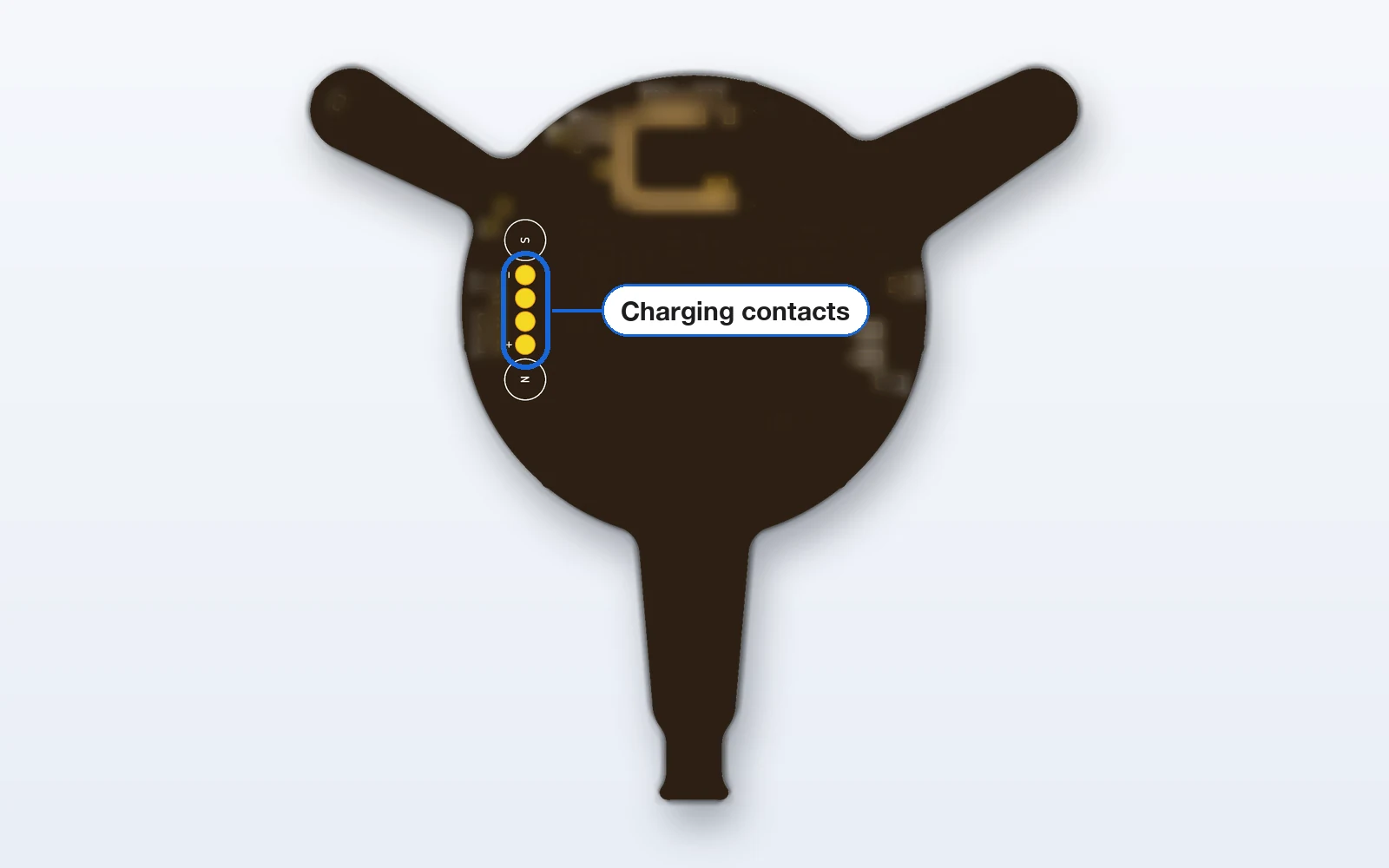
On the outside of the patch are four flat contacts. The charger clips over them while the patch stays on the arm, and magnets pull it into position so the contacts meet without any fiddling. There is no socket on the patch, and the contacts are there to bring power in.
Warmth, right next to skin
Charging a battery makes heat, and here the heat is millimetres from skin. We modelled how warm the patch gets while it charges and chose the gentler of the charging speeds the circuit allows, which the model says keeps the skin side comfortably below the limit we set ourselves. The faster setting is not used on the body. Charging takes longer as a result, and that is the right trade for something touching you.
We also looked at where the charging chip sits. Moving it anywhere else on the board would barely change how much it warms the skin sensor, so it stays where it is, with a spread of copper under it on every layer of the board to carry its heat sideways instead of letting it gather in one spot.
The thermometer knows it is charging
The same warmth would fool the skin thermometer. A reading taken while the charger is warming the patch is about the charger, not about you. So the software marks skin temperature as unreliable while the patch is charging and for a while afterwards, until it has settled back to the temperature of the arm (more on why Patch reads temperature twice in this post). The charger’s own battery-temperature sensor sits on the skin side too, keeping an eye on the battery while it charges.
Asleep until the first charge
One more thing falls out of the same design. Patch is meant to leave the factory switched fully off, drawing as little as it can, and to wake up the first time it meets its charger. The first charge is the moment it starts.
On-body charging is designed into the board and into the rules the software has to follow. It is also on the list of bench tests still to run: the model says the warmth stays within our limit, and a real charge on a real arm has to confirm it.